Locate verified local heating repair technicians across all 100 North Carolina counties. From coastal barrier islands to Blue Ridge mountain peaks, connect directly with independent contractors experienced in residential gas and electric furnace troubleshooting.
Heating diagnostics and equipment specifications referenced across our North Carolina network align with standards established by national energy agencies and regulatory safety bodies:
Diagnostic procedures follow standards outlined in the NFPA 54 National Fuel Gas Code and the North Carolina State Mechanical Code.
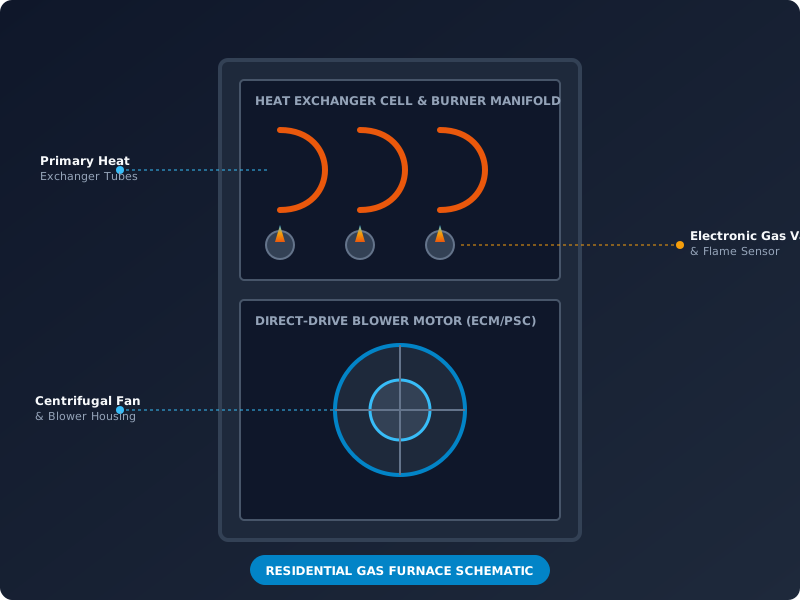
Testing hot surface ignitors, 24V redundant gas valves, flame sensors, and flue venting draft inducers. Diagnosing burner ignition lockouts safely and accurately.
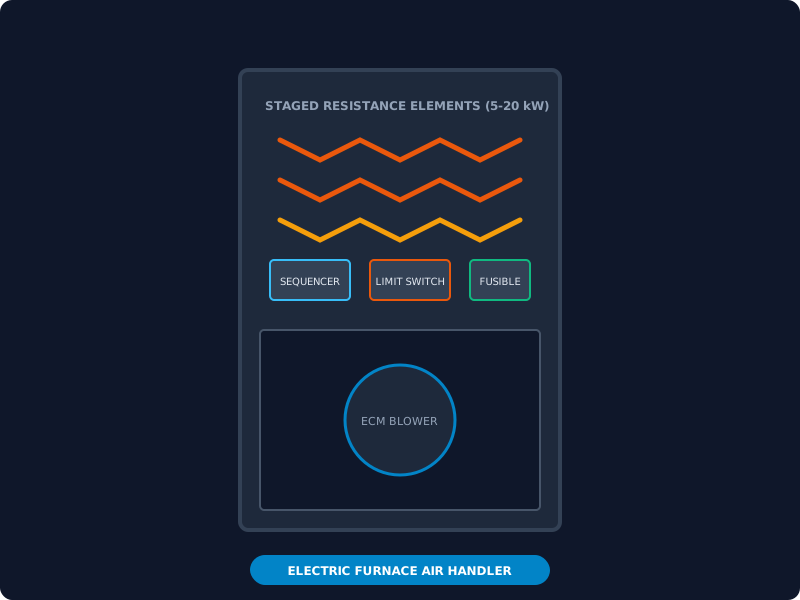
Replacing broken nichrome resistance coils, faulty multi-stage time-delay sequencers, and thermal fusible link safety cutouts in residential air handlers.
Rapid contractor dispatch during severe cold snaps, sudden system lockouts, and electrical short-circuits across North Carolina communities.
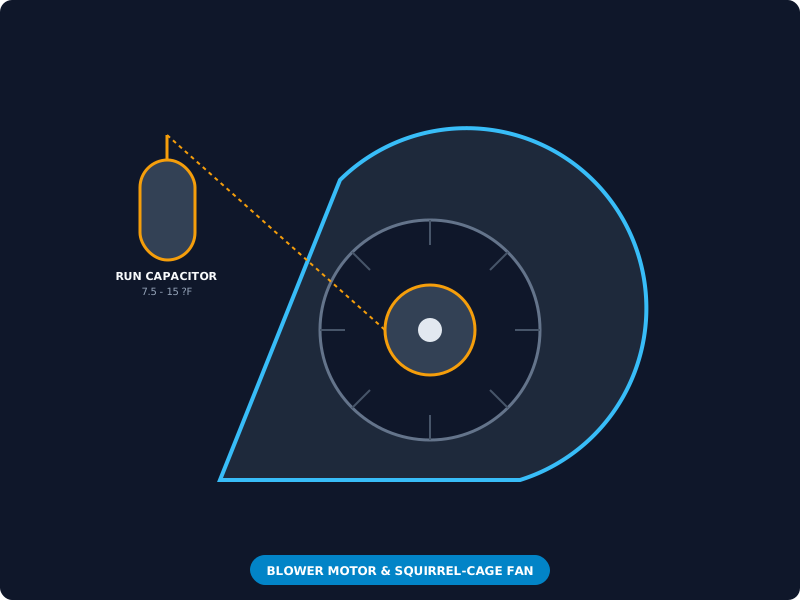
Diagnosing failed PSC run capacitors, defective ECM motor modules, seized fan bearings, and high static pressure restrictions in ductwork.
Review technical diagnostic procedures from real-world residential heating failure modes. These educational breakdowns illustrate how qualified technicians systematically isolate electrical, pneumatic, and combustion anomalies.
Furnace ignites burners normally for 3 to 4 seconds, then gas valve shuts down with a click. System attempts ignition three consecutive times before entering an Integrated Furnace Control (IFC) 1-hour soft lockout.
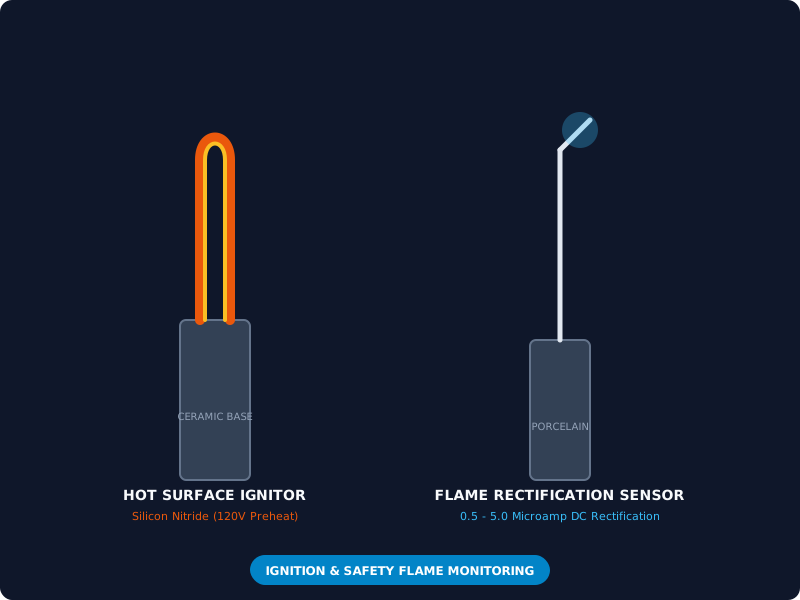
The technician inspected the 120V supply voltage, verified proper grounding integrity (under 2 ohms ground-to-neutral), and connected a true-RMS multimeter in series with the flame rectification sensor lead wire set to microamps DC (µA). Upon ignition, flame rectification current registered only 0.3 µA, below the manufacturer minimum operational threshold of 0.8 µA.
Burner assembly was secured, flame sensor extracted, and sensor rod burnished using ultra-fine 0000 non-abrasive steel wool. Sensor mounting bracket was cleaned to ensure clean mechanical bonding to ground.
Flame sensor reconnected in series with multimeter. System called for heat: flame rectification current measured a robust 3.2 µA DC. The IFC maintained steady gas valve voltage through a full 20-minute operating cycle with zero dropouts.
Main burners ignite and run for approximately 6 minutes, after which the gas valve closes while the circulation blower motor continues blowing lukewarm to room-temperature air continuously through supply registers.
Dual-port digital manometer measured external static pressure across supply and return plenums. Supply static pressure registered 0.58 in. w.g. and return registered 0.44 in. w.g., yielding a total external static pressure (TESP) of 1.02 in. w.g., significantly exceeding the maximum 0.50 in. w.g. equipment rating. Dual-probe thermometer revealed supply plenum air temperature rising to 175°F against a 140°F factory high-limit trip rating.
Restricted pleated filter removed and replaced with a low-resistance high-efficiency 4-inch media filter cabinet. Return air drop was evaluated and adjusted. High-limit switch contacts and thermal bimetal disc were tested for mechanical fatigue and recalibrated.
Total external static pressure remeasured at 0.46 in. w.g. Supply temperature stabilized at 128°F (within the 40°F - 70°F temperature rise specification on the furnace rating plate). Burners maintained continuous steady-state operation for 35 minutes with no limit tripping.
Homeowner reports humming sound originating from furnace cabinet upon thermostat heat call, delayed warm airflow from registers, and an intermittent electrical burning odor.
Technician opened lower blower compartment, disconnected main power disconnect, discharged motor run capacitor, and tested with a digital capacitance meter. The 10 µF / 370V rated capacitor tested at 3.1 µF (69% capacitance loss). Amperage clamp placed on blower motor run winding during startup recorded 9.8 amps against a full-load amp (FLA) rating of 6.2 amps before motor internal thermal overload opened.
Installed a new OEM-specification 10 µF / 440V heavy-duty metallized polypropylene film run capacitor. Cleaned squirrel-cage fan wheel fins of dust accumulation to restore aerodynamic balance and lubricated motor sleeve bearings.
Motor restarted smoothly with zero mechanical vibration. Running current measured at 4.9 amps (comfortably below the 6.2 FLA limit). Temperature rise across plenum verified within factory rating envelope.
Need prompt heating repair? Connect directly with on-call independent heating technicians serving all 100 North Carolina counties.
Select your local city below to view covered ZIP codes, regional climate heating factors, nearby dispatch hubs, and direct contractor referral lines.
Continuous cold airflow typically stems from either a tripped high-limit switch or a malfunctioning flame sensor. Modern gas furnaces utilize a primary limit switch positioned near the heat exchanger. Restricted air filters or blocked return grilles trap thermal energy, driving internal plenum temperatures beyond safe factory thresholds. The limit switch promptly disconnects current to the gas valve for fire safety while commanding the blower motor to run constantly to cool the furnace chamber. Alternately, a dirty flame sensor fails to detect microamp rectification current within four seconds of burner ignition, causing the integrated furnace control (IFC) board to lock out the fuel supply while running the draft inducer and blower.
Hot surface ignitors (HSIs) manufactured from silicon carbide or silicon nitride experience thermal fatigue across hundreds of heating cycles. A failing ignitor typically presents visual evidence such as a hairline fracture across the element coil, gray oxidation discoloration, or complete absence of the characteristic yellow-orange glow through the burner sight glass upon a call for heat. Electrically, testing across the disconnected Molex leads with a digital multimeter set to ohms should reveal a resistance reading between 40 and 100 ohms for standard silicon carbide ignitors, or 10 to 45 ohms for silicon nitride. An infinite reading (OL) signifies an internal open circuit requiring replacement.
Loud metallic grinding or high-pitched squealing originates almost exclusively from the blower assembly. Direct-drive permanent split capacitor (PSC) and electronically commutated motors (ECM) employ sealed internal sleeve or ball bearings. Over years of seasonal duty, lubricant within the bearing race degrades or leaks out, producing dry metal-on-metal friction that accelerates thermal breakdown and can freeze the motor shaft entirely. In older belt-driven systems, misaligned pulley sheaves or a cracked, dry-rotted V-belt can generate piercing squeals. Operating a furnace with failing blower bearings risks overheating the motor windings and damaging the main control board relay.
A fractured heat exchanger represents a primary carbon monoxide risk under the U.S. Consumer Product Safety Commission (CPSC) Guidelines because it permits toxic combustion byproducts to infiltrate the household supply ductwork. Key physical indicators include visible soot accumulation around burner ports, heavy rust scaling inside the draft hood or cabinet interior, and a burner flame that flickers, lifts, or changes from a crisp cone of dark blue to erratic bursts of yellow whenever the circulating blower kicks on. Air differential pressure from the blower pressurizes the plenum and disrupts the draft pressure inside cracked exchanger cells. Digital combustion analyzer testing revealing excessive ambient carbon monoxide levels or fluctuating flue oxygen warrants immediate system shutdown.
Short cycling occurs when the burner lights and operates normally for several minutes before abruptly cutting out prior to reaching the thermostat target temperature. The most prevalent root cause is an over-temperature trip caused by inadequate static pressure. Clogged pleated filters, closed supply registers, or an undersized return duct restrict airflow across the exchanger cells, rapidly elevating cabinet temperatures to the high-limit switch cutout point. Other electrical culprits include a misconfigured thermostat heat anticipator setting, a failing pressure switch with fluctuating vent draft, or weak grounding across the furnace chassis that disrupts flame rectification.
Intermittent pilot systems bridge the historical gap between standing pilot lights and modern hot surface ignition. Instead of maintaining a wasteful continuous gas flame throughout summer and winter, an intermittent pilot energizes a high-voltage spark electrode and pilot solenoid valve solely when the wall thermostat calls for heat. Once the pilot flame impinges upon the local thermocouple or rectification rod, proving steady fire, the secondary valve coil opens to supply gas across the primary burner manifold. Direct spark systems bypass the pilot assembly entirely, igniting primary manifold gas with a rapid high-voltage spark arc directly over the initial burner tube.
HVAC technicians widely apply the $5,000 rule: multiplying the estimated repair cost by the physical operating age of the heating equipment. If an estimate of $850 applies to a 14-year-old furnace ($850 × 14 = $11,900), replacement represents the sounder long-term decision. Major structural component failures—most notably cracked primary or secondary heat exchangers, seized ECM variable-speed blower assemblies out of warranty, or obsolete circuit boards no longer supplied by OEM manufacturers—routinely reach $1,200 to $2,500 in parts and labor. Newer 96%+ AFUE condensing units certified under the EPA ENERGY STAR® program and U.S. Department of Energy (DOE) standards also deliver immediate monthly utility reductions compared to legacy 65% to 80% draft-diverter units.
During months of idle warm-weather operation between May and October, ambient airborne dust, pet dander, and microscopic textile fibers settle across the external surfaces of the steel heat exchanger tubes and within the burner chamber. Energizing the heating elements or lighting gas burners for the first seasonal cycle subjects this settled organic matter to temperatures exceeding 140°F to 180°F, vaporizing the residue. This initial odor should dissipate completely within 20 to 45 minutes of continuous cycling with good interior ventilation. An odor resembling scorched plastic, melted electrical insulation, or rotten eggs (mercaptan gas odorant) requires immediate shutdown.
High-efficiency furnaces rated at 90% AFUE or higher extract latent heat by condensing combustion flue gases into acidic water. This moisture drains through an internal collector box, trap, and PVC condensate drain line. Dirt, algae, or sediment can obstruct the narrow internal condensate trap or external drain tube. Modern condensing units feature built-in float safety switches or pressure transducers linked to the inducer housing. Standing water backs up into the draft housing, preventing the differential pressure switch from closing its electrical contacts, which causes the control board to abort burner ignition and display a pressure-switch fault code.
The low-voltage automotive-style blade fuse located on the integrated furnace controller protects the 24-volt secondary step-down transformer against direct electrical shorts. A fuse blowing immediately upon a call for heat points toward a chafed thermostat wire contacting metal cabinet framing, a shorted contactor coil, or a compromised gas valve solenoid coil drawing excessive amperage. If the fuse only blows several minutes into the heating cycle, the fault frequently traces to vibration in the draft inducer harness, a shorted limit circuit touching hot metal, or an intermittent short within an electronic ignition module.
Experienced on-call contractors provide thorough diagnostics, itemized repair estimates, and complete safety inspections across all North Carolina counties.
Call (844) 499-1061